I. Executive Summary: Recalibrating Our Strategy for Digital Sovereignty
The ambition to establish digitally sovereign platforms in India, often championed by initiatives promoting self-reliance, faces a critical reality check. While India stands as a vibrant, rapidly digitizing market 1, homegrown social media applications consistently demonstrate a systemic inability to transition initial download spikes into sustainable user retention and profitable unit economics. We observe a fundamental mismatch between the high technological demands required to compete with global incumbents (e.g., sophisticated AI, world-class infrastructure) and the relatively low monetization capacity (ARPU) characteristic of the Indian market.2
Case Study Vignettes and Core Vulnerabilities
The failures are exemplified by recent high-profile cases. The messaging app Arratai 3, despite backing from Zoho and government support, saw its initial surge—driven by nationalistic pride and promises of enhanced privacy 3—evaporate quickly due to poor user experience, persistent glitches, and the insurmountable barrier of the network effect.4 Similarly, the microblogging platform Koo 5 dissolved in 2024 after struggling to raise funds amid unsustainable operational losses, confirming that the cost of running a technology-intensive social platform far exceeded its limited revenue streams.7
The Five Critical Failure Vectors
Our analysis identifies five interrelated vectors that explain these systemic vulnerabilities:
- Network Effect Overload: User inertia and the prohibitive cost of switching from ubiquitous global platforms.
- Technology and UX Debt: A chronic failure to invest in competitive, proprietary AI/ML and deliver seamless, polished user interfaces.
- Linguistic and Operational Complexity: The high technical and financial burden of localizing sophisticated technology for India’s multilingual, code-switching environment.
- Financial Unsustainability: Broken unit economics stemming from low advertising yields and high, fixed infrastructure costs.
- Regulatory Choke Point: Disproportionate compliance costs (e.g., DPDPA) and the high risk of political intervention and operational instability (e.g., internet shutdowns).
Immediate Strategic Imperative
For us to succeed, we must abandon the direct, mass-market clone strategy that plagued platforms like Koo. Our path to long-term viability must be predicated on vertical integration into underserved niches, achieving technical superiority through proprietary AI tailored for vernacular India, and establishing a robust, non-advertising-centric monetization model from the platform’s inception.
II. Introduction: The Paradox of Potential and Digital Sovereignty
Market Context and Ambition
India’s digital landscape presents a profound paradox: it is one of the world's most rapidly expanding internet markets, hosting over 900 million active internet users and serving as the world's third-largest startup ecosystem.1 The internet economy is projected to nearly reach $1 trillion by 2030, fueling the national mission for "Atmanirbhar" (self-reliant) digital platforms that prioritize data sovereignty and local cultural relevance.8 Yet, despite this massive market potential and the availability of world-class engineering talent, the platforms that define Indian online life—from search and communication to social interaction—remain overwhelmingly foreign-owned, highlighting a dependence on external technology.9
Defining the Scope of Failure
This report focuses on diagnosing the underlying structural, technological, and financial flaws that have resulted in the collapse or stagnation of high-profile, homegrown platforms. We specifically examine the struggles of Arratai, which aimed to challenge WhatsApp’s messaging dominance, and Koo, which attempted to create an indigenous alternative to X (formerly Twitter).5 The initial excitement surrounding these ventures, often propelled by government encouragement and patriotic sentiment 3, suggests that the failures were not due to a lack of market opportunity, but rather systemic weaknesses in execution and business modeling.
The "We" Perspective
We recognize that previous ventures were not failures of ambition but of critical foresight regarding the competitive landscape and required product maturity. Understanding these systemic weaknesses is fundamental to shaping our competitive strategy and maximizing our return on investment. The lessons drawn from Arratai's retention problems and Koo's financial implosion offer crucial guidance on the operational rigor and differentiated value proposition required to successfully launch and sustain a major digital platform in India.
III. The Unforgiving Market Barrier: The Network Effect Blockade
A. The Inviolable Dominance and the Cost of Switching
Global applications established deep roots in the Indian market during a time when the country lacked a conducive startup ecosystem and widespread internet penetration.10 This first-mover advantage, coupled with massive capital investment, created an almost inviolable dominance built on the network effect. The value of a communication platform increases exponentially with the number of accessible people.3
WhatsApp, for instance, is the undisputed default communication medium; users assume conversations occur there unless otherwise specified.3 This ubiquity generates powerful user inertia. Arratai, despite being backed by Zoho and successfully generating a massive spike in downloads—jumping from less than 10,000 to over 7 million in a few months 6—could not overcome this barrier. The initial surge was fueled by curiosity and nationalistic appeal, as the app promised stronger privacy protections and local data storage.3
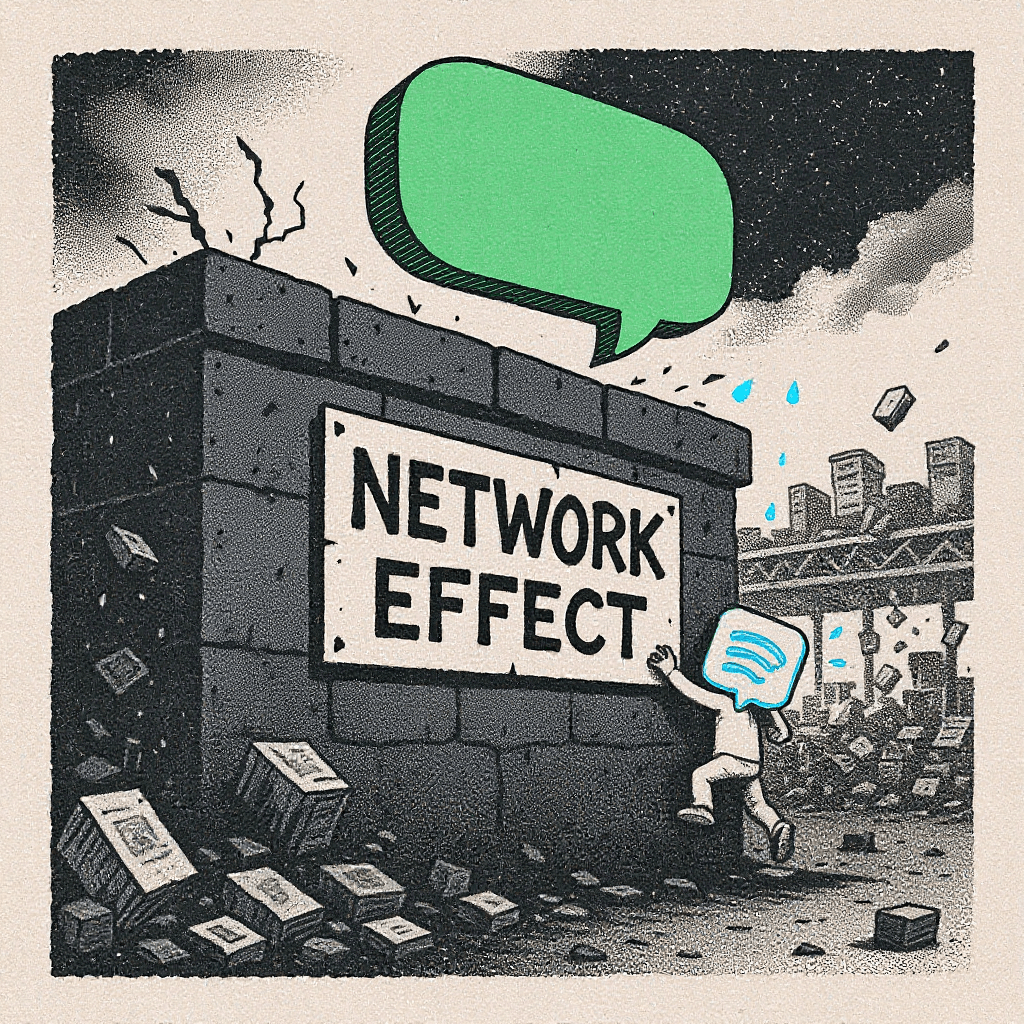
However, retention quickly dropped because users cited the "hassle" of maintaining two primary chat applications.3 This phenomenon is the Utility Wall versus the Emotional Barrier. Nationalistic sentiment acts as a powerful catalyst for initial downloads, but it is immediately negated by the daily friction imposed by requiring users to manage two separate social graphs.11 The user’s prioritization of convenience and functional utility over patriotic consumption demonstrates that a homegrown platform must first meet or exceed the incumbent’s network reach and product quality before national origin becomes a secondary factor for sustained adoption. If the product is not functionally superior or equal to the incumbent, the high cost of switching—the loss of immediate access to one's entire existing network—makes long-term retention untenable.3
B. Strategic Failure in Mass Market Confrontation
The failure of many Indian platforms stems from a strategic flaw: direct, broad-market confrontation against global titans is doomed due to insurmountable network effects.2 Koo, specifically, became trapped by its positioning as a direct clone of X (Twitter).7 Despite garnering supply-side support from influential voices, Koo fundamentally failed to offer any substantial competitive advantage or differentiation over the global incumbent, which was sufficient for attracting and sustaining mass demand.7
The pathway to survival demands a different approach. We find that success is achieved through Verticalization as the Counter-Strategy. Homegrown players must aim for niche adoption and vertical integration rather than broad mass migration.15 ShareChat and its short-video twin, Moj, demonstrate this successful model by focusing not on the English-speaking, globalized Tier 1 urban audience, but on the vernacular, regional language-first market often referred to as "Bharat" (Tier 2 and Tier 3 cities).14
This strategy involves integrating deeply into the cultural fabric, positioning the platform as the "digital chowk of Bharat".14 Users come to ShareChat to engage with local festival rituals, cultural news, and local community needs, creating trusted, high-engagement communities where the generalist approach of global platforms falters.16 For us, this means that challenging monopolies requires achieving domain dominance in a specific, high-value vertical, making our platform an indispensable tool for that segment.
IV. The Product & Technology Deficit: Building Beyond the Clone
A. The UX and Feature Lag
Global applications have established an exceptionally high standard for product polish and seamless user experience (UX).17 Indian platforms often fall short of this benchmark, leading to rapid user disillusionment after the initial download wave subsides. Arratai is a prime example: despite its privacy focus, users found its interface "clunky," its features "limited" compared to WhatsApp (lacking robust voice/video calls and file-sharing), and reviews pointed out persistent "bugs and glitches" that led to frequent crashes and slow performance.4
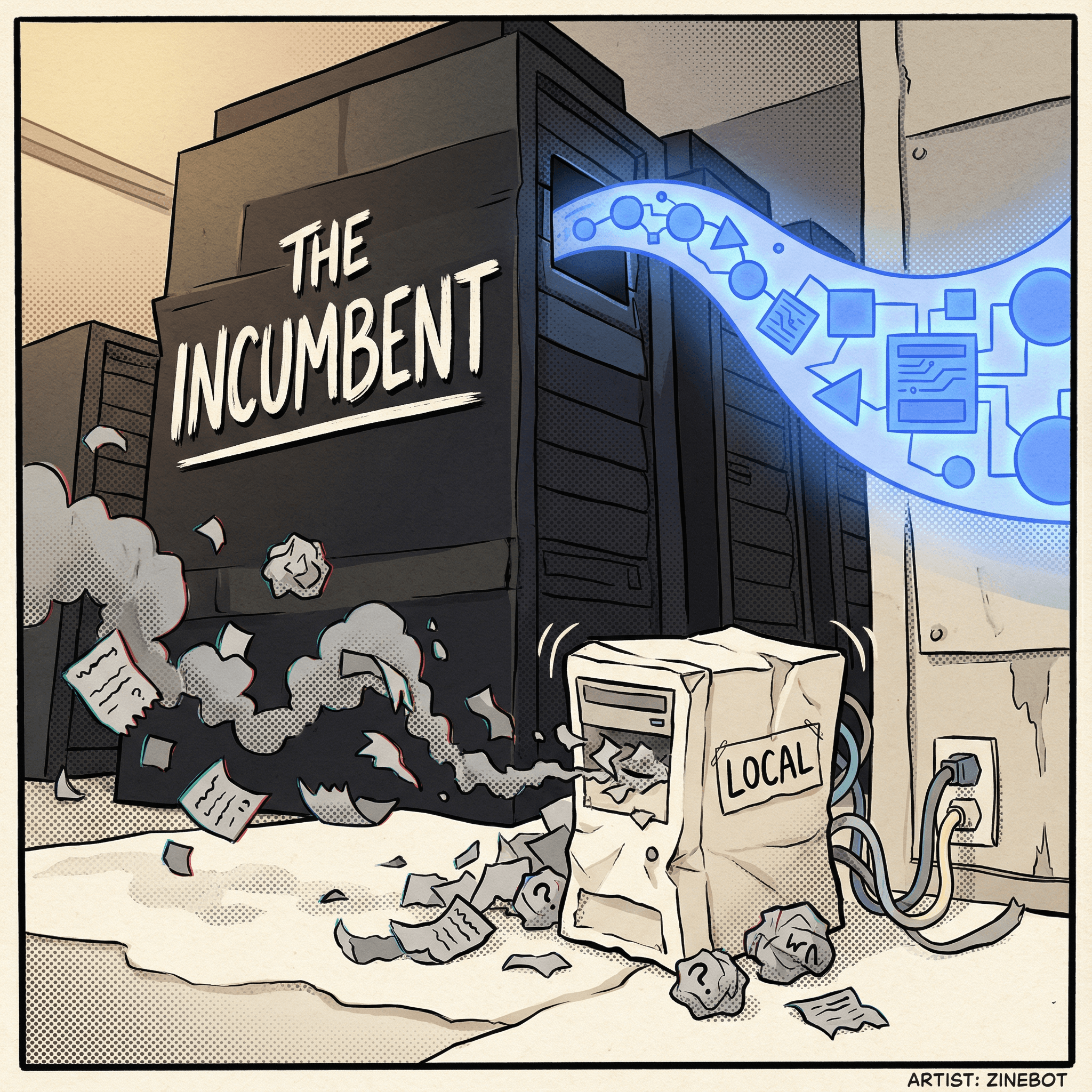
Furthermore, global competitors maintain their dominance through relentless innovation, constantly rolling out new features and better experiences, even without strong competition.6 Indian platforms, by contrast, often play a perpetual game of catch-up, imitating existing features belatedly instead of offering fresh, locally relevant differentiation.6
This lack of polish signals low quality and unreliability, which contributes to poor user retention. In a highly sensitive area like messaging, where trust is paramount (especially when promising privacy, as Arratai did) 18, a bug-ridden or clunky UI signals poor engineering and creates a crucial dent in user confidence.4 We must recognize that high-quality UX should not only match global aesthetics but must also be optimized for the Indian user. For instance, e-commerce applications like Meesho tailor their UX for first-time internet users in Tier 2/3 cities using icon-led navigation and vernacular onboarding.19 Arratai's failure lay in falling short of the basic test of fluidity and stability, rendering its privacy advantage moot.4
B. The Critical Failure to Invest in AI/ML
The technology deficit is most evident in the failure to develop sophisticated core algorithms, particularly recommendation engines. Following the ban on TikTok, several Indian entrepreneurs rushed to fill the vacuum with simple "TikTok clones".10 However, these platforms failed because they lacked the proprietary, sophisticated AI recommendation engines that are essential for driving engagement through personalized content discovery.10
This deficit constitutes a profound Technology Debt Trap. Recommendation technology is extremely difficult to build and requires years of sustained investment.14 Building an advanced, deep-learning recommendation system constitutes a significant financial barrier. For instance, the estimated cost for developing an enterprise-grade advanced recommendation system can range from $100,000 to over $500,000, depending on the complexity of the model and the data required for training.21
The lack of investment in proprietary AI leads directly to low user engagement and poor personalization.10 We must view this AI capability as the necessary, expensive infrastructure for high user retention, not a luxury feature. The platforms that show resilience, such as ShareChat/Moj, attribute their stability and engagement, in part, to their commitment to building and refining their content curation algorithms.14 For us, this proprietary AI capability must be regarded as the core intellectual property that creates a competitive moat.
V. Operational Complexity: Navigating India's Linguistic and Infrastructural Landscape
A. The Multilingual AI Inclusion Crisis
India's immense linguistic diversity—comprising 22 Scheduled Languages and hundreds of regional dialects 23—poses unique and costly operational challenges that global platforms often have the resources to address, but which cripple under-capitalized local ventures. This complexity makes developing accurate language models exceptionally difficult.
The core technical challenge for AI/ML is the pervasive issue of code-switching, where users spontaneously mix English words with vernacular languages (e.g., Marathi sentences embedding English terms).24 Unlike English, where spelling is largely standardized, many Indian languages lack uniformity in writing. AI models trained on inconsistent or fragmented, often monolingual, datasets struggle to learn accurate linguistic patterns, resulting in flawed translations, unnatural text generation, and inaccurate content curation.24 Simple preprocessing techniques designed for data-rich English fail to account for the morphological richness of Indian languages like Tamil.25
This linguistic complexity directly translates into an amplified Content Moderation and Safety Challenge. Moderating content across a fragmented, multilingual landscape requires human expertise across numerous regional nuances and dialects, forcing higher operational expenditure.25 While average labor costs for content moderation in India may be lower than in developed markets, the scale and complexity drastically increase the aggregate financial burden, thereby increasing regulatory risk and operational cost.26 We must commit to significant investment in specialized Natural Language Processing (NLP) tailored for Indian code-switching if we aim to successfully target the "Bharat" user base.
B. Infrastructure and Operational Scaling Trade-offs
India is currently undergoing a massive urban transition, with nearly 41% of Indians expected to reside in cities by 2030, driven by the emergence of Tier 2 and Tier 3 cities as new centers of opportunity.27 This necessitates that any major digital platform must guarantee reliability and consistent, high performance across diverse geographies, demanding robust infrastructure capacity.27
We face a constant Sovereignty vs. Efficiency Dilemma concerning infrastructure. While India promotes indigenous data center development through initiatives like the National Informatics Centre (NIC) 28, global providers frequently offer highly competitive pricing, particularly for compute and storage resources, due to their immense scale and high competition.29 Arratai, for instance, specifically touted its focus on Indian data storage as an advantage.4 However, the economic pressure to remain competitive on pricing and achieve flexible scaling often forces reliance on global cloud providers, which can increase capital efficiency but potentially undermines the very narrative of digital sovereignty that initially drives user downloads. Deploying global regions for non-sensitive applications or development environments often offers substantial cost benefits, freeing up funds for other strategic projects.29
VI. Financial Vulnerability: Unit Economics and the Funding Winter
A. The Unsustainable Unit Economics of Cloning
The most critical factor in the systemic failure of Indian social media apps is the inability to achieve sustainable unit economics. While India possesses a vast user base, the reality is a significantly lower Advertising Revenue Per User (ARPU) compared to Western or East Asian markets.2 This means that platforms require an immense user scale merely to break even on the inherently high costs associated with sophisticated technology, infrastructure, and compliance.
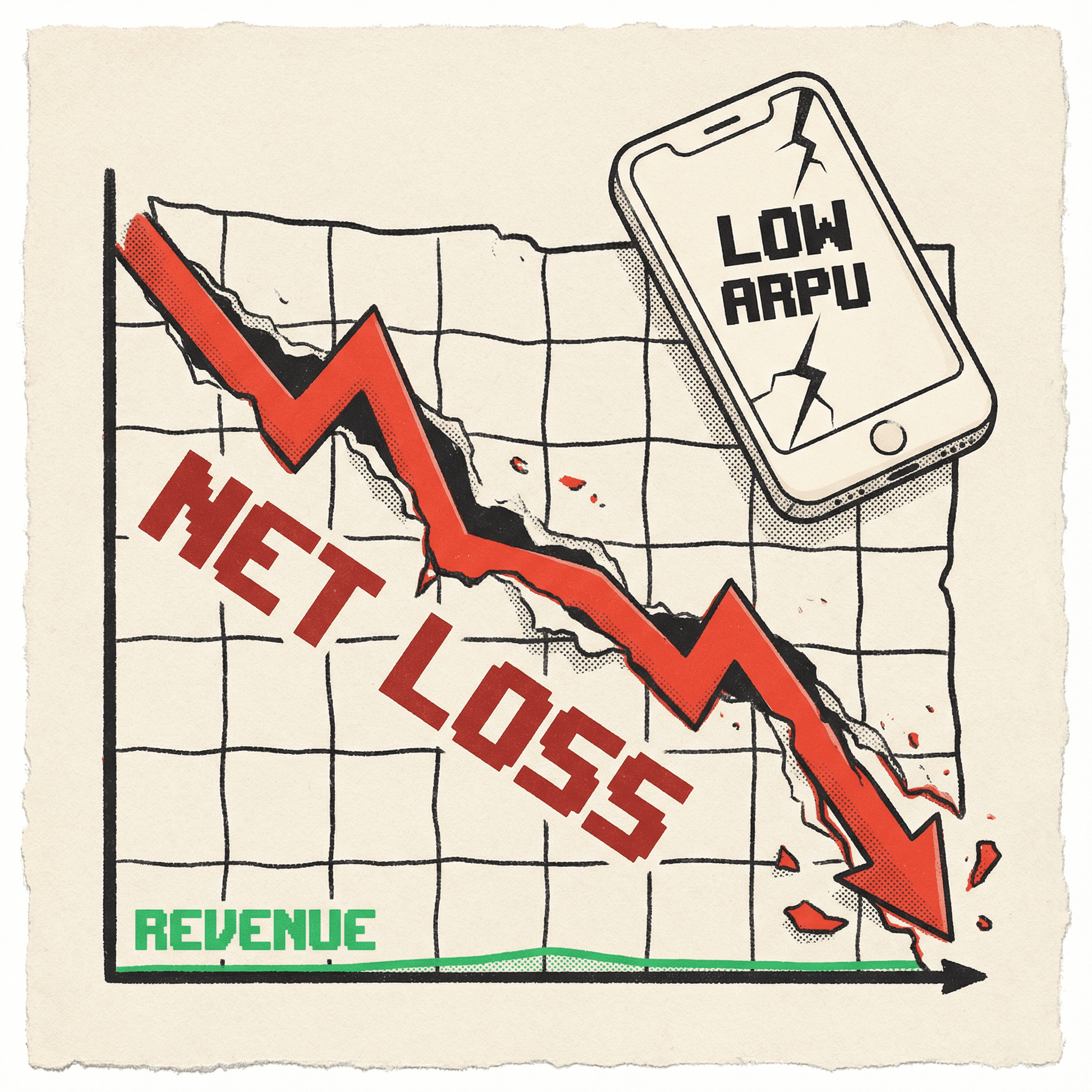
The demise of Koo serves as a stark warning. The platform, despite being backed by prominent global investors like Tiger Global 7, reported a colossal net loss of INR 244 Crore against a mere INR 21 Lakh in revenue between FY20 and FY22.7 This financial asymmetry proved fatal. The co-founders explicitly cited the high cost of technology services required to keep a social media application running as the definitive reason for the final shutdown in July 2024.7
The failure of heavily funded clones like Koo, combined with global economic caution, has led to an ongoing funding winter, where venture capital funding in India moderated significantly from $25.7 billion to $9.6 billion over 2022–23.30 This decline has heightened investor expectations and vigilance. Investors are no longer funding "growth at all costs" but are strictly demanding robust unit economics, efficient cost management, and a clear, scalable path to profitability.31
B. The Mandate for Revenue Diversification
Reliance solely on advertising revenue is a high-risk proposition due to the sector's volatility and the overwhelming dominance of Meta and Google, which control the bulk of ad dollars.8 Furthermore, advertising revenue can be impacted by external factors, such as regulatory changes (e.g., GST hikes on real-money gaming platforms impacting their ad spending).33
The successful navigation of this financial environment by platforms like ShareChat/Moj provides a crucial blueprint. ShareChat's parent company, Mohalla Tech, successfully trimmed its adjusted EBITDA loss by 72% in FY25 33 through a rigorous focus on improving unit economics, even trading off revenue growth for financial discipline.33 Crucially, they pivoted away from a pure advertising dependency towards high-margin, consumer-direct models:
- Live Streaming: This revenue segment has shown sustained growth.33
- Subscription Content: The platform aggressively invested in the micro-drama segment, launching QuickTV, which operates on a subscription model and has shown strong traction.33
This success demonstrates that the mandate for survival is transforming the platform from a commodity that sells traffic (low-margin advertising) to a utility that delivers unique, valuable, monetizable services. We must leverage our reach and engagement to attract targeted advertiser spend while simultaneously monetizing our dedicated user base through innovative formats like subscriptions, seeking a "UPI-style ecosystem push" to strategically break global monopolies in monetization.14
Table: Monetization Strategy Benchmarks (ShareChat vs. Failure Cases)| Platform | Primary Market Strategy | Primary Monetization Model | Outcome / Status | Lesson for Us |
|---|---|---|---|---|
| Koo 7 | Direct clone of X; focused on political/national discourse. | Advertising, attempted subscriptions (Koo Premium). | Shut down (July 2024); astronomical losses (INR 244 Cr). | Pure advertising/cloning model fails due to low ARPU and high technology cost. |
| Arratai 3 | Direct challenger to WhatsApp; focused on privacy/patriotism. | Zoho-backed (implied utility/B2B integration model). | High initial hype, rapid retention failure due to product friction and network effect. | Privacy is not a replacement for seamless utility and network reach. |
| ShareChat/Moj 33 | Vernacular social & short video; focused on Bharat (Tier 2/3). | Hybrid: Advertising + Live Streaming + Subscription (QuickTV). | Cash flow positive; successful loss reduction (72% adjusted EBITDA loss cut). | Diversification into high-margin segments (subscriptions/streaming) is mandatory for financial viability. |
VII. The Regulatory Burden: Compliance, Coercion, and Data Sovereignty
A. The Disproportionate Burden of Data Regulation
The Indian regulatory environment, while aimed at digital sovereignty and data protection, imposes a disproportionately high compliance burden on young startups compared to established global corporations. The Digital Personal Data Protection Act (DPDPA), operationalized through rules in 2025 35, mandates significant technical and legal overhead. Obligations include reporting data breaches within a strict 48-hour timeframe, maintaining data logs for an entire year, and establishing public grievance redressal mechanisms.37
The most significant threat to a startup's continuity is the risk of Uniform, Existential Penalties. The DPDPA establishes massive financial penalties, which can reach up to INR 250 Crore (approximately $30 million).37 This penalty structure applies equally to smaller data fiduciaries and large Significant Data Fiduciaries.38 The implication is clear: a fine of INR 250 Crore is a manageable business risk for a global giant but constitutes an existential threat to a VC-backed startup already struggling with profitability. This regulatory framework acts as a powerful natural selection mechanism, disproportionately favoring well-capitalized global firms that can absorb high compliance costs and potential fines. We must, therefore, view rigorous, world-class compliance systems as mandatory initial investment capital required to de-risk our entire venture.
B. Political and Geopolitical Risk
Digital platforms operating in India are subject to political and geopolitical risks that introduce operational instability and investor uncertainty. Authorities frequently utilize powers under the Information Technology Act (IT Act, Section 69A) to block content deemed a threat to sovereignty or public order, often raising concerns about the lack of transparency and due process.39 This environment introduces significant self-censorship risks for platforms aiming to navigate the political discourse.40
Furthermore, India is one of the countries most affected by internet shutdowns, temporary actions that severely inhibit economic activity, interfere with the startup ecosystem, and create investment uncertainties.41 The necessity for content moderation and the high compliance costs in a politically sensitive environment 43 amplify the volatility of the social media sector.
The confluence of high compliance costs, the risk of arbitrary state intervention, and operational interruptions (shutdowns) means that geopolitical uncertainty is a major investment deterrent.39 We must ensure our legal and public policy strategy is as robust as our engineering strategy to navigate this high-stakes environment, recognizing that legal rigor is a prerequisite for financial stability.
VIII. Conclusion and Strategic Recommendations for Our Future
A. Synthesis of Core Findings
The analysis of platform failures, from the network effect breakdown in Arratai to the financial implosion of Koo, confirms that achieving success in the Indian digital ecosystem demands a fundamentally different approach than simply creating a localized version of a global app. Success requires overcoming three critical barriers simultaneously: the network effect through vertical specialization, the technology deficit through proprietary AI investment, and the financial vulnerability through diversified monetization. In short, successful platforms must be built for the reality of low Indian ARPU and high Indian operational complexity.

B. Our Actionable Strategic Blueprint
To maximize the probability of long-term viability, we commit to the following strategic pillars:
- Strategic Focus: Verticalization and Niche Dominance
We will prioritize building highly specialized platforms that address acute needs within fragmented, high-engagement communities (e.g., Tier 2/3 users, specific language or professional groups) where global network effects are weakest.14 Our aim is to become the indispensable utility tool for a targeted segment, thereby establishing an independent network effect, rather than functioning as a secondary, generic public square. - Mandate Investment in Proprietary AI/ML
We recognize that advanced recommendation technology is the core technological moat. We must allocate critical capital and time to developing specialized AI/NLP to specifically overcome India’s code-switching and nonstandardized multilingual challenges.24 This superior personalization capability will drive the high retention and engagement necessary to sustain the platform and convert users from the initial download phase.10 - Adopt a Hybrid Monetization Model from Day Zero
We will not be reliant solely on advertising, which is insufficient given the low ARPU reality. Our financial model will incorporate diversified, consumer-direct revenue streams, including subscriptions, micro-payments, and high-value B2B services, to stabilize unit economics and accelerate the path to profitability.33 This strategy follows the successful blueprint set by resilient players like ShareChat, which pivoted to subscription-led media consumption (QuickTV) and live streaming.34 - Establish Preemptive Compliance and Legal Rigor
We will treat DPDPA compliance, data sovereignty requirements, and content moderation as mandatory, non-negotiable costs of doing business in India.37 We must implement automated, world-class governance systems immediately to mitigate the risk of existential penalties and regulatory interference, recognizing that legal de-risking is equivalent to financial stability.38 - Long-Term Product Resilience
We are committed to building enduring technology that prioritizes quality, polish, and reliability over short-term marketing surges. We understand that sustained user trust, particularly in privacy and data handling, is intrinsically linked to product stability and seamless user experience. This resilience ensures that our localization efforts, such as multilingual support and culturally relevant design, are effective and not undercut by technical flaws or glitches.18
| Failure Vector | Key Example/Data Point | Causal Chain | Broader Implication for Our Strategy |
|---|---|---|---|
| Network Effect Blockade | Arratai downloads spike (7M) but crash due to "hassle".3 | Patriotism (Download) -> Utility Wall (Friction): Initial emotional lift cannot overcome high switching cost and ingrained habits of global incumbents. | Mandate: Focus on niche utility, not mass replacement. |
| Technology Debt | Short video clones lack sophisticated AI recommendation engines.10 | Low R&D -> Poor Personalization -> Low Retention: Failure to invest $100k-$500k in core AI results in rapid user drop-off. | Mandate: AI/ML is core IP; R&D must be disproportionate early investment. |
| Financial Catastrophe | Koo's loss of INR 244 Cr vs. INR 21 Lakh revenue.7 | Low ARPU -> Unsustainable Unit Economics -> Funding Freeze: Reliance on global-scale costs with local ad revenue guarantees collapse in a funding winter. | Mandate: Hybrid monetization (subscription, B2B) to stabilize revenue streams. |
| Linguistic Complexity | AI fails with code-switching and nonstandardized languages.24 | AI Difficulty -> Poor Moderation/Curation -> Regulatory Risk/UX Failure: Inability to master regional languages destroys both engagement and compliance. | Mandate: Dedicated NLP R&D for Indian vernaculars and culturally relevant UX.19 |
| Regulatory Risk | DPDPA penalties up to INR 250 Cr for all company sizes.37 | Uniform Penalty -> Disproportionate Burden: Compliance costs and penalty risk become an existential threat to startups, favoring large, subsidized global firms. | Mandate: Establish top-tier compliance and governance from Day 1 to mitigate financial risk. |